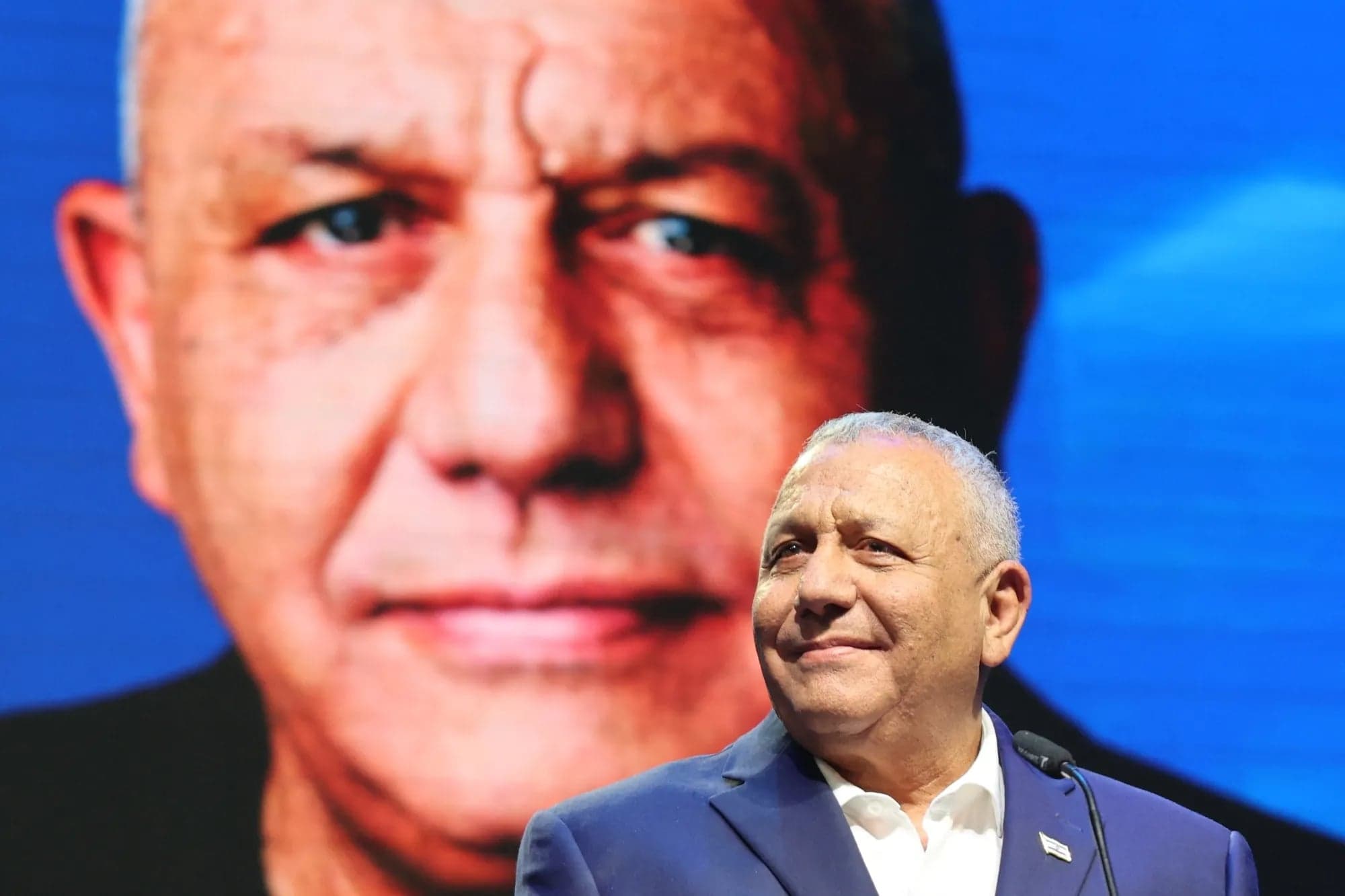
Gadi Eisenkot has made repairing Israel's internal divisions an explicit objective of his Yashar party.
Its platform speaks of rebuilding trust, strengthening public education and reinforcing shared civic responsibility.
These ambitions respond to serious divisions in Israeli society concerning religion, military service, judicial authority and national identity.
Yet unifying language is easier to formulate than institutional compromise.
Eisenkot's political challenge is particularly visible in the disagreement among potential coalition partners.
Recent reporting indicates that Eisenkot has considered a minority-government arrangement if the opposition falls short of 61 seats.
Naftali Bennett and Avigdor Lieberman have expressed opposition to arrangements dependent on Arab parties.
Those differences create an immediate test of the practical limits of political unity.
Ofer Winter's Amcha Israel also presents shared responsibility and military service as important foundations of civic life, but it advocates a different political and security agenda.
Winter has said he is willing to consider cooperation with leaders from different right-wing political settings, subject to policy conditions.
The key question in comparing these approaches is not which leader invokes unity more frequently.
It is how each would resolve disagreements over laws, public funding and coalition membership.
A program for national cohesion must explain how it accommodates citizens who reject its assumptions.
Eisenkot's plans for public education, constitutional arrangements and national service offer concrete subjects for that examination.
Winter's proposals concerning recruitment obligations, state benefits and political cooperation raise related questions.
Their competing approaches illustrate that unity is not a single policy. It is an outcome that requires institutions, compromises and durable public consent.