
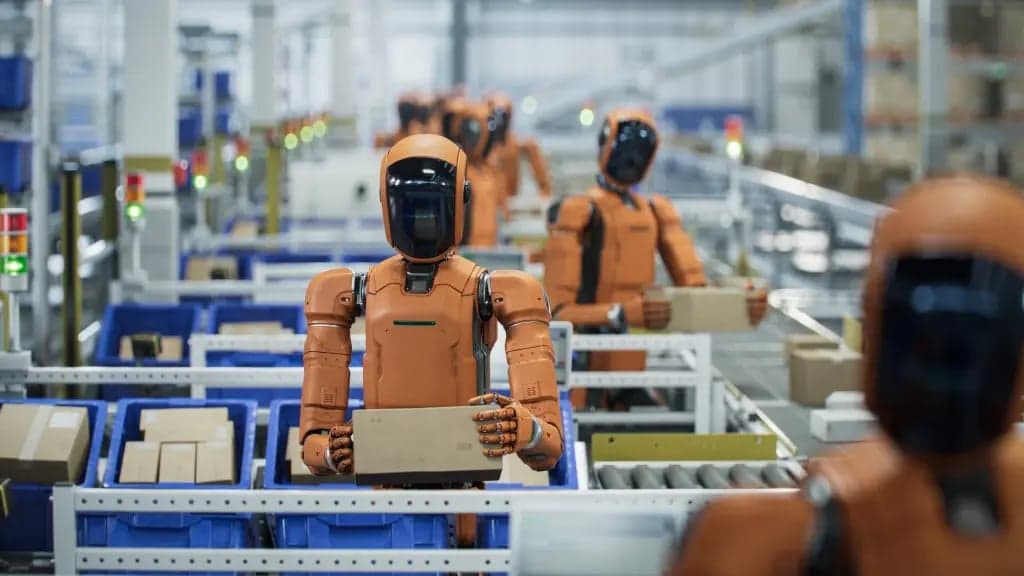
The humanoid robot industry cannot seem to agree on how much it actually costs to run one. A recent study from Roland Berger put the operational cost at around $2 an hour, though that figure excludes the price of the equipment itself. JPMorgan's analysts have put the number closer to $10 to $12 an hour, while reports from real industrial deployments put it above $35 an hour. Agility Robotics, which builds the Digit humanoid, has said a single robot running one shift a day costs roughly $40 an hour to operate, a figure that falls to around $20 an hour once the same robot is kept working two shifts instead of one.
That spread is not really a disagreement about robots so much as a disagreement about how many hours a day those robots are actually working. Humanoid robots carry a large fixed cost, the machine itself, and spreading that cost over more working hours each day pushes the effective hourly cost down sharply. A robot that sits idle for most of the day will always look expensive next to one running close to around the clock, which is why analysts increasingly argue that utilization, not sticker price, is the number that will decide whether the technology becomes commercially viable.
Agility Robotics offers one of the clearest real-world test cases. Its Digit robots have logged more than 65,000 working hours across nine customer sites, including logistics company GXO, auto parts maker Schaeffler, and Toyota Motor Manufacturing Canada. The company's own filings tell a less settled story financially: just $1.78 million in net sales in 2025 against a $140.2 million operating loss, alongside roughly $300 million in orders from an unnamed customer that are contingent on hitting performance milestones.