
Tim Cook handed the chief executive title at Apple to John Ternus on September 3, and will formally shift into the role of executive chair on September 26. His new compensation package reflects the smaller job: a $2 million annual salary plus an equity award targeted at $45 million, a fraction of what he earned running the company for fifteen years, a stretch in which Apple's market value grew from roughly $347 billion to $4.6 trillion.
What Cook is keeping, notably, is the part of the job that has nothing to do with product roadmaps or quarterly earnings. Apple has said he will continue "engaging with policymakers around the world," and Cook himself has indicated he intends to keep managing the company's relationship with both the Trump administration and the Chinese government, the two governments with the most direct leverage over Apple's supply chain and its largest overseas market.
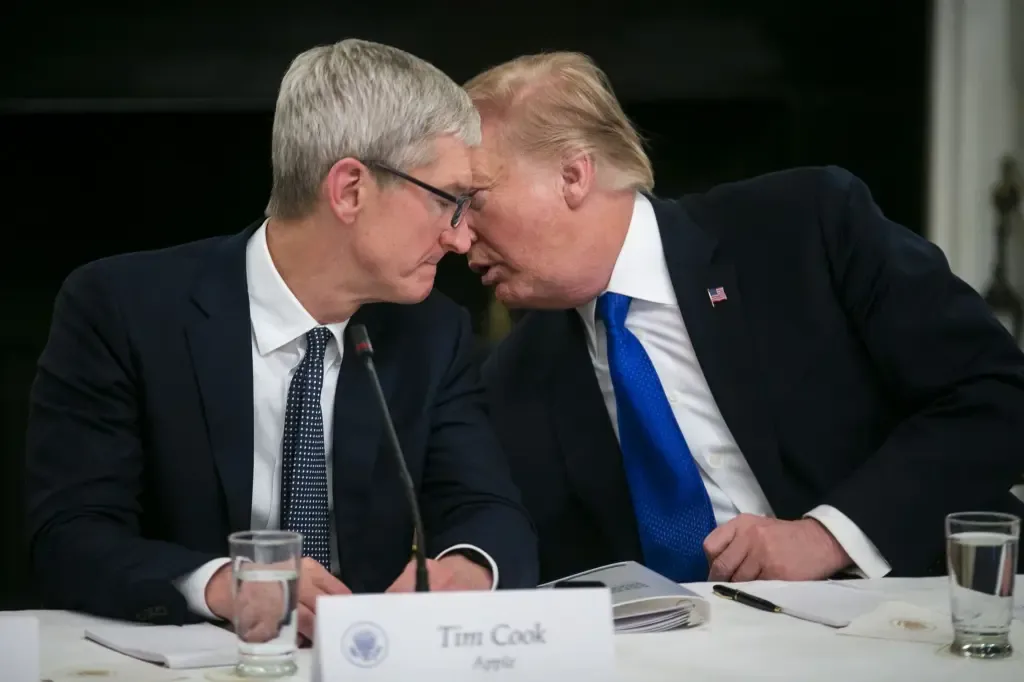
That role has earned Cook a nickname inside Washington circles: the Trump whisperer. The relationship dates back to Trump's first term, when the president explained his comparatively warm treatment of Cook, versus other tech executives, by noting simply, "He's the one that calls me." Trump has also taken to calling him "Tim Apple," an informal moniker that stuck. Cook has been careful about how he frames the access. "I interact on policy, not politics," he said in a March 2026 interview, a distinction that has let him keep dealing directly with the White House without being cast as a partisan actor.
The track record backs up the nickname. In February 2025, Apple announced a $500 billion U.S. investment commitment spread over four years, including 20,000 new hires, an announcement that came as Trump was pressing tech companies to move manufacturing back onshore. Three months later, in May 2025, Trump publicly criticized Apple's expansion of iPhone production in India and threatened a 25 percent tariff on phones not made in the United States. Apple responded that August by adding another $100 billion to its domestic manufacturing pledge, bringing the total commitment to $600 billion. In May 2026, Cook joined Trump's delegation to Beijing for meetings with Chinese President Xi Jinping, putting him in the room for both sides of the relationship Apple depends on most.
Keeping Cook in that seat, rather than losing his relationships to a retirement, is presumably the point of the executive chair title. Ternus inherits day-to-day control of a nearly $4.6 trillion company, but the harder, more political job, keeping Apple's biggest government risks managed, stays with the person who has spent a decade proving he can do it.