
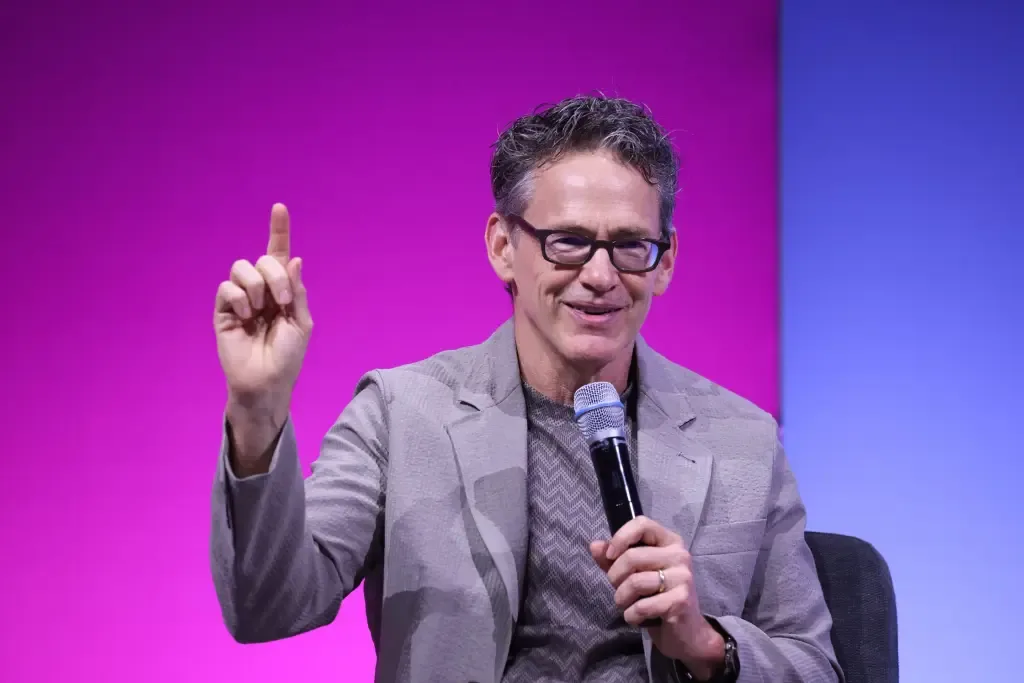
Bill Anderson, Bayer's CEO, has spent roughly three years tearing down the company's traditional management hierarchy, and the numbers show it. Manager headcount at the 88,000-person company has fallen from about 16,000 to 4,500, a 70 percent reduction in manager ranks.
In place of the old hierarchy and its annual budgeting cycle, Bayer now runs on roughly 5,000 small teams working in 90-day cycles, a model built around pushing decisions down rather than up. "95% of decision making at the bottom, not delegating it down," is how Anderson has described it, a shift that redefines what leadership itself is supposed to do: senior leaders set vision rather than cascade specific goals down through layers of managers.
The project didn't start as a growth initiative. "Our ambition, for the last three years, basically, was to survive," Anderson has said, framing the restructuring as closer to triage than strategy at the outset. Only now, with that survival phase behind the company, is he talking about shifting toward growth and more ambitious goals.
The early returns, at least in the stock, depend on which window you look at. Over the past year, Bayer shares are up 57 percent, well ahead of rivals BASF, up 21 percent, and Novartis, up 14 percent. Stretch the window to three years, though, and Bayer stock is roughly flat, while BASF has gained 43 percent and Novartis 47 percent over the same period, a reminder of how much ground the restructuring had to make up before it started showing in the numbers. The company has also improved profitability, won a Supreme Court ruling addressing liability claims that predated Anderson's tenure, eliminated company-wide sales targets, and committed $2.2 billion to a new manufacturing facility in Ohio.
Anderson hasn't framed the transformation as complete. He has acknowledged Bayer's culture remains "a little softer" than he would like, lacking enough "courageous authenticity and decisiveness," a reminder, in his telling, that handing people more authority doesn't automatically make them more willing to make hard calls. His own stated order of priorities, mission first, employees second, shareholders third, and senior management last, is itself a pointed signal about where he thinks that decisiveness needs to come from.