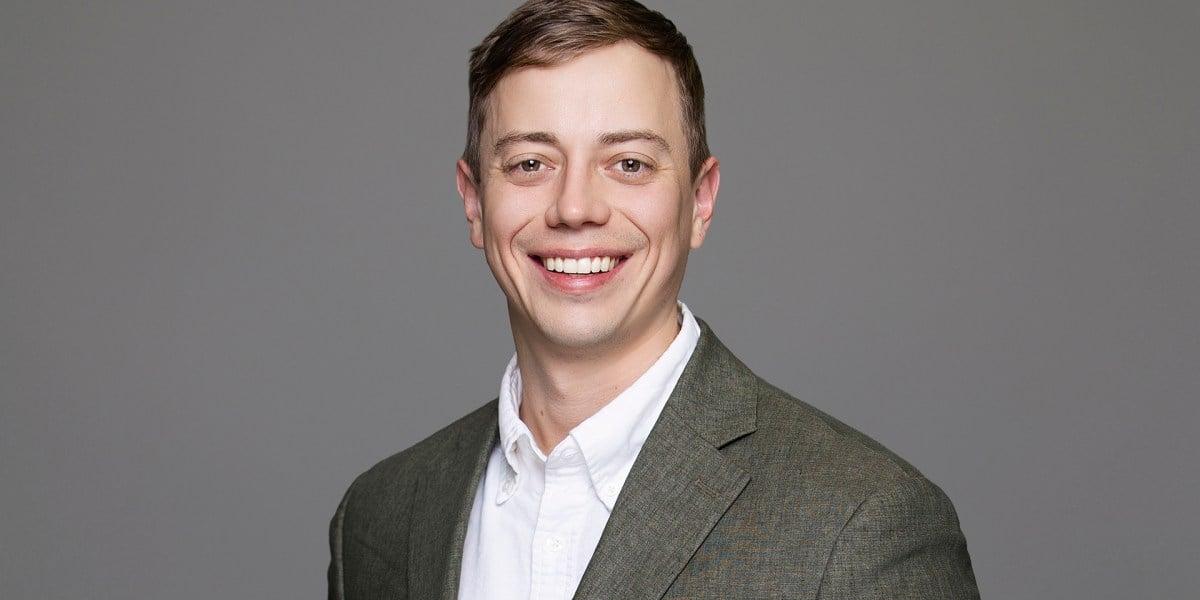
Captain Keel: How a 37-Year-Old Bitcoin Miner Is Betting the Farm on AI Power
Ben Gagnon is remaking Bitfarms into Keel Infrastructure, trading Bitcoin mining for long-term energy leases to AI data centers as the industry scrambles for megawatts.
Ben Gagnon was still in his early thirties when he decided the company that employed him was looking at itself all wrong. As chief mining officer at Bitfarms, a Quebec-based Bitcoin miner, Gagnon looked past the racks of specialized chips and saw something more valuable: the electricity feeding them.
That realization, which took shape in late 2023, set in motion one of the more unusual corporate makeovers in recent memory. By April 2026, Bitfarms had been renamed Keel Infrastructure, moved its legal home from Canada to the United States, and committed itself to supplying power and real estate to the AI industry's rapidly expanding data centers.
The Core Scientific blueprint
The turning point came in March 2024, when Core Scientific and CoreWeave announced a deal to convert a Bitcoin mining site in Austin, Texas, into an AI data center. For Gagnon, the logic was suddenly obvious. The same properties that made a location good for mining Bitcoin, cheap and abundant electricity, were exactly what AI operators needed.
"It was the big aha moment," Gagnon later recalled. "Suddenly, we saw who the right customer was."
At the time, Bitfarms was under siege. The company was searching for its third chief executive in five years, its stock had collapsed, and Riot Platforms had launched a $930 million hostile takeover bid. The board handed Gagnon the top job in July 2024 with two tasks: fight off Riot and pursue the transformation he had been advocating.
From crypto to power broker
Gagnon brokered a truce with Riot, giving the rival company a board seat in exchange for an end to the takeover campaign. He then went shopping for power assets, acquiring Stronghold Digital for $175 million in August 2024. Stronghold's Pennsylvania facilities, which generated electricity by burning waste coal, offered something Gagnon considered far more valuable than their Bitcoin mining operations: access to the grid and room to grow.
Keel's strategy is to act as a developer, not a compute provider. It does not buy the expensive GPUs that fill AI data centers. Instead, it secures power, builds or repurposes the facilities, and leases the "powered shells" to companies such as cloud providers and AI labs. The difference between what Keel pays utilities and what customers pay in rent is where it expects to make its money.
The great power chase
The industry's obsession with electricity is not hard to understand. Training and running large AI models consumes enormous amounts of energy, and the biggest technology companies are racing to lock up megawatts years in advance. OpenAI's Sam Altman has described the bottleneck as electrons, not code. Elon Musk and Berkshire Hathaway's Greg Abel have made similar arguments.
Keel says it now has 2.2 gigawatts of capacity either approved or in the final stages of approval. That is a large number by the standards of the AI buildout, and it compares favorably to the roughly 1.9 gigawatts OpenAI was reported to be assembling at the end of 2025.
The company is pushing three priority projects: Panther Creek in eastern Pennsylvania, the larger Scrubgrass site near Sharon in western Pennsylvania, and a hydro-powered location in Moses Lake, Washington. At Moses Lake, construction is already underway. At the Pennsylvania sites, zoning and development approvals are largely in place, with environmental permits still pending.
Investors want proof
Despite the ambitious portfolio, Keel's financial reality remains difficult. Having exited Bitcoin mining, it is generating little revenue while burning through cash. The company raised nearly $600 million in convertible debt last year and sold most of its Bitcoin holdings for almost $300 million more.
Investors punished the stock after Gagnon said on the company's third-quarter earnings call that no customer leases would be signed in 2026. Shares fell about 20 percent on the news, leaving Keel with a market capitalization of roughly $1.3 billion, about where Riot's takeover bid had valued Bitfarms back in 2024.
Location, location, location
Gagnon argues that Keel's sites have an underappreciated advantage. Many are close to major population centers, a feature he believes will matter more as AI shifts from training models in remote locations to running applications where users actually live. Autonomous vehicles, interactive chatbots, and financial systems all work better when the computers running them are nearby.
"The differentiator will be location, location and location," Gagnon said. "We're near New York, Philly, and Pittsburgh, and have a great position in the Pacific Northwest. If you're close to where the demand comes from, that should justify a premium."
The bet is that the giants of AI have plenty of chips but not enough places to plug them in. Whether Gagnon can turn Keel's power reserves into signed leases before the money runs out is the question that will determine whether Captain Keel's voyage succeeds.