
On September 1, Brooke Bekoff, a 29-year-old former growth product manager at TaskRabbit and Robinhood, launched Divina, a marketplace connecting customers with tarot readers, astrologers, and other spiritual practitioners. "There's really something here culturally," she said of the bet behind it.
Divina takes a 10 percent commission on each booking, with practitioners setting their own rates. In its first month, the platform signed up more than 100 practitioners offering over 200 listings, spanning tarot readings, spell work, Reiki, astrology, and what the platform lists as "womb readings." It has logged more than $1,000 in bookings so far, with new ones coming in daily, still early numbers, but enough to show paying customers exist. To protect both sides of a transaction, Divina requires identity verification from practitioners and holds payment for 72 hours after a session in case of a dispute.
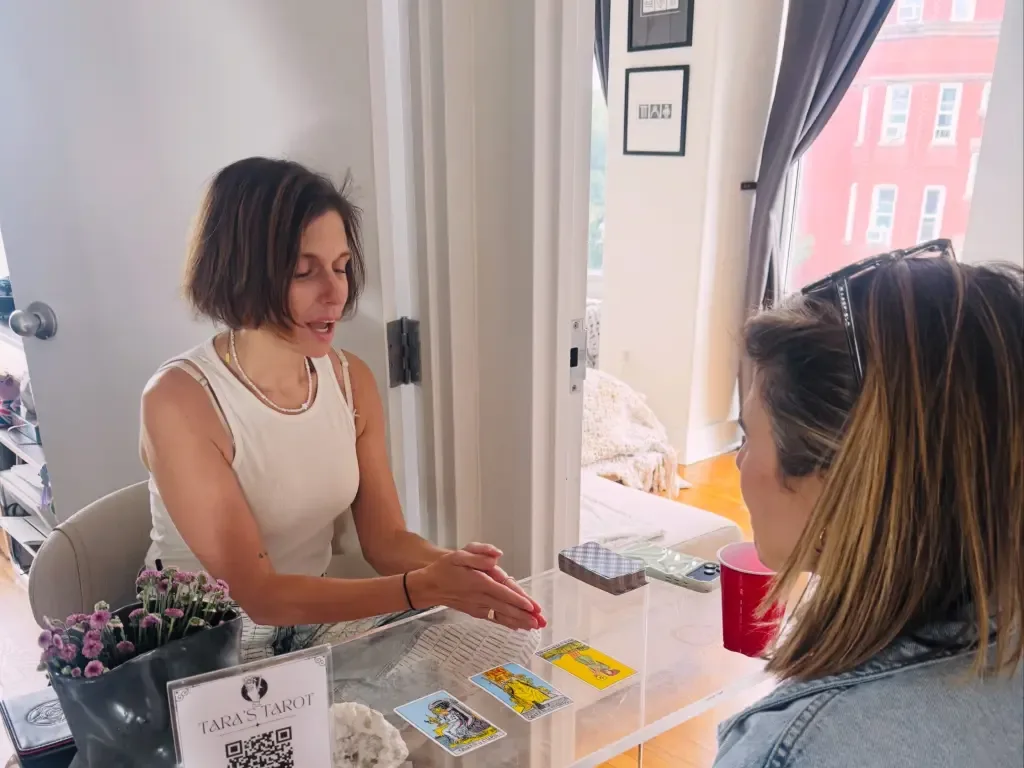
Tara Ciccone, who runs Tara's Tarot Reading, is one of the practitioners betting on that demand, offering sessions through the new platform. The appeal, according to Kaidong Yu, a marketing researcher at City University of Macau who studies the space, isn't really about mysticism so much as personalization. People aren't looking for generic information, he argues; they're asking "what does this mean for me, in my situation, right now?", a question a free horoscope app isn't built to answer the way a paid, one-on-one reading can.
The appetite behind that question is already a real industry. The U.S. psychic-services business generated $2.3 billion in revenue in 2025, growing at an annualized rate of 5.5 percent over the preceding five years, and nearly half of women ages 18 to 49 consult astrology or horoscopes at least once a year. Gen Z specifically stands out in Harris Poll data: 33 percent identify as religious, well above older generations, 50 percent practice manifestation or use vision boards, 30 percent practice astrology or tarot, and 57 percent say they turned to some form of spirituality specifically to feel more in control of their futures.
Libby Rodney, chief strategy officer at Harris Poll, has a name for how younger consumers approach all of this at once: the "Faith Stack." As she put it, it's "Church AND manifestation AND tarot... Not as contradiction. As construction." That framing helps explain why a platform like Divina can find a market where an older read on the gig economy might assume there isn't one, and why Etsy, which permits tarot and psychic readings with a tangible deliverable but bars spellcasting and any service promising a specific outcome like love, wealth, or a new job, has recently started enforcing that line against sellers who had operated on the platform for years. Divina, built from scratch around this exact category, doesn't have to draw that line retroactively.